When a patient sits down and shows me photos of their smile in motion, they rarely point to the nose first. They point to the teeth, the lips, the way the cheeks lift. Then they zoom in on a detail that only shows up mid-laugh: the nostrils widen more on one side, or the alar rims pull sharply lateral, making the tip look narrower and the base look wider. That dynamic flare can dominate a moment that should feel effortless. The tool that often restores balance is small, precise, and reversible. A few units of botulinum toxin in the right muscle can soften nasal flare without changing your nose at rest.
The goal is motion control, not a different nose
Nostril flare is a dynamic event. At rest, the nose may look proportionate. During speech, laughter, or a big inhale, the alar wings lift and splay. The muscle most responsible is the dilator naris (part of the nasalis complex), which pulls the alar sidewall laterally. In some faces, the depressor septi nasi adds a downward tug on the tip during smiling, which can heighten the perception of flare. Botox injections target this motion. The aim is to reduce excessive lateral pull while preserving natural breathing and expression.
Botox for nostril flare is not a substitute for rhinoplasty. It will not narrow the bony base or reduce cartilage volume. What it can do is tune dynamic behavior so the nose reads calmer and more refined in motion. For many patients, that subtle shift is enough to change how they feel on camera and in conversation.
What is Botox and how Botox works in this area
Botox treatment relies on a purified neurotoxin that temporarily blocks the release of acetylcholine at the neuromuscular junction. In simple terms, it interrupts the signal that tells a muscle to contract. After injection, the targeted muscle weakens over several days, reaches peak effect around 10 to 14 days, then gradually recovers as the nerve endings sprout new connections.
In the lower third of the nose, small superficial muscles create fine movements. That is why micro dosing matters here. Compared with botox for forehead lines or botox for crow’s feet, where larger muscle groups are involved, nasal work uses fewer units and shallower placement.
A quick anatomy tour you can feel
Press lightly on the soft sidewall of your nose near the alar crease and flare your nostrils. You will feel the alar segment of the nasalis at work. That fiber band pulls laterally, opening the nostril. Now smile and notice whether your tip dips. If it does, the depressor septi nasi is engaging, a vertical muscle that tethers the tip toward the upper lip. Some patients have asymmetry between left and right dilator naris activation, which is why one nostril flares bigger. A careful injector palpates these movements, then marks two to four micro points per side to map the pattern. This is precision botox injection mapping, not a routine pattern.
Who benefits from nasal flare refinement
Patients who notice a “winging” of the nostrils during expressive moments and do not want structural surgery tend to do well. Actors, presenters, and anyone on video calls all day are especially attuned to this detail. I also see patients pursuing facial harmony where the nose in motion distracts from the eyes or smile. People who already like their nose at rest and only dislike the flare are the best candidates. If your concern is broad alar base width at rest, botox for facial balancing will not change that. In those cases, surgical alar base reduction or filler camouflage in neighboring areas may be more appropriate.
Age is less important than muscle pattern. I have treated first time patients in their twenties who want a natural look, and older patients who notice stronger pull as facial soft tissue thins. Men respond just as well as women, though thicker skin can mask mild changes, which is discussed during the botox consultation process.
How the appointment flows
A focused consultation comes first. I ask patients to smile, laugh, inhale, and speak while I watch for flare, tip depression, and any uneven smile. I check for a history of breathing issues, prior rhinoplasty, allergies, or vasomotor rhinitis. Good nasal airflow matters. We talk about botox risks and benefits, how long botox lasts, and realistic botox before and after expectations with specific examples. If everything aligns, we proceed the same day or schedule for later.
Skin is cleansed. I mark micro points along the alar base where the dilator naris activates and sometimes a single point at the columella base if the tip dips with smile. The dose is small, usually a total of 2 to 6 units per side for the flare, and 1 to 2 units for the depressor septi, if needed. These are typical ranges for adults. Individual needs vary. Needles are fine gauge and the depth is superficial, just enough to reach the muscle without crossing into the vestibular lining. The injections take under five minutes. Pressure is applied to limit pinpoint bruising.
What the first two weeks feel like
Botox results timeline follows a familiar arc. Day one feels unchanged. By day three to five, the flare begins to soften. Peak control arrives by the two week mark. At that point, patients often describe feeling less “snatch” at the sidewall when they laugh. Photos confirm narrower flare during expression and a more stable tip. Breathing at rest should feel the same. If you feel stuffy or “too tight” on the sidewall, the dose might have been too strong or too deep. That is rare when you use micro units and proper placement.
We schedule a follow up at two weeks. If one side still flares more, a touch-up with 0.5 to 1 unit can even the motion. This is where personalized botox plans make the difference. A small tweak shapes the whole result.
How long the effect lasts and maintenance planning
Expect the effect to last about 8 to 12 weeks. Smaller muscles can wear off faster than areas like the glabellar complex. Some patients hold closer to three months, others closer to two and a half. If it is your first treatment, you might notice botox wearing off signs like a gradual return of flare on smiling around week eight. Maintenance visits two to four times per year keep the pattern steady.
A sensible botox maintenance schedule for nasal flare is often seasonal. Performers might schedule small pre-shoot touch-ups every 8 to 10 weeks. Others prefer three times per year. Over time, repeated treatments can slightly retrain movement patterns, so you may need fewer units for the same effect.
Dosing judgment and safety guardrails
The nose is a high payoff, low volume area. The art lies in giving just enough to reduce unwanted motion while preserving normal nasal valve function. Too much toxin in the alar region can decrease lateral wall support and leave the nose feeling restricted on deep inhale. I keep doses small and test responsiveness. Baby botox or micro botox principles work here: low units, precise placement, specific goal.
Botox safety information is straightforward. Common botox side effects include small bruises, swelling at injection points, mild tenderness, and temporary asymmetry as the product settles. Headaches are uncommon with nasal dosing. Serious complications are rare when the injector understands anatomy. We avoid intravascular injection by staying superficial and aspirating when appropriate. Patients with active sinus infections or significant structural airway compromise are not ideal candidates. If you use decongestants daily or have chronic nasal obstruction, address airflow first. An ENT evaluation can clarify.
Comparing Botox to surgical and filler options
Botox vs fillers is the most common fork in the road here. Fillers can project the tip or smooth small indentations, and in experienced hands they can camouflage a mild dorsal irregularity. They do not reduce flare, since flare is muscular. If tip droop with smile is the main issue, a micro dose to the depressor septi combined with a subtle filler lift to the columella can improve animation without changing the nose at rest. If the base is wide at rest and during expression, alar base reduction surgery is the definitive option. Many patients try botox first to see how much change they can achieve in motion before committing to surgery.
Botox vs dysport vs xeomin also comes up. All are botulinum toxin type A formulations. Dysport can spread a bit more, which is not always desirable near the nasal valve. Xeomin behaves similarly to Botox with a different accessory protein profile. I prefer products with predictable diffusion in small fields near the airway. The dose conversion is product specific. Your result depends far more on injection mapping than on brand.
Where nostril flare sits among broader facial balancing
Minimizing nostril flare often pairs with other subtle tweaks that calm the lower face in motion. A light touch to the levator labii superioris alaeque nasi can reduce a gummy smile without flattening upper lip animation. A tiny dose to the mentalis can smooth chin dimpling that intensifies when you talk. If masseter hypertrophy makes the lower face appear heavy, masseter botox for jaw slimming can rebalance the overall affordable botox in Ann Arbor outline, which makes the nose feel more proportionate. None of these should be heavy handed. The shared aim is botox for a natural look that holds up to video, bright daylight, and a friend sitting two feet away.
Patients who grind their teeth or have TMJ symptoms often carry tension in the midface. Botox for teeth grinding and botox for TMJ focus on the masseter and temporalis. As that tension eases, habitual nasal flare sometimes softens a bit on its own. That is an example of treating upstream muscle imbalance to improve facial harmony.
The consultation details that matter
A good botox consultation process includes three things: measured photography in motion, palpation of active muscles, and a discussion of trade-offs. If you expect zero flare, you may impede airflow or create a stiff, unnatural smile. If you accept some flare, you get better breathing and animation. The right answer depends on your work, your lung capacity needs if you are an athlete or singer, and your personal aesthetic priorities.
We also talk about how botox lasts and the budget implications. Low unit areas like the nose are cost efficient, but they require more frequent maintenance than a glabellar treatment. Some patients plan a personalized botox plan that rotates areas to match events — a brow lift touch-up in spring, nasal flare control before wedding season, masseter dosing every four to six months.
Technique notes from the chair
I prefer a 32 to 34 gauge needle, syringe with clear half-unit markings, and reconstituted on-label toxin at a conservative dilution to allow exact micro units. Patient seated upright. I ask the patient to flare, then relax. I mark the alar crease junction at the apex of movement, then consider one auxiliary point slightly superior if the sidewall pulls up, not just out. The angle is shallow, almost intradermal, to catch the superficial muscle fibers without drifting into the vestibule. Depth is a few millimeters. Slow injection, minimal volume.
If there is a strong tip drop with smile, I place a single tiny depot at the base of the columella where the depressor septi inserts. The risk here is over-relaxing tip support, which can change the nasolabial angle in ways patients may not want. A test dose on the conservative side is smarter than trying to fix an overcorrection.
What not to expect
Botox will not narrow thick alar tissue. It will not fix a deviated septum, improve chronic congestion, or reshape cartilage. If you see prominent nasal lines at the sidewall in static photos, those are skin creases, not flare, and may respond better to skincare, light resurfacing, or a small amount of filler. If your concern is dorsal hump or wide mid-vault, that is outside the scope of botox for the nose. Setting the right boundaries prevents disappointment.
Before and after: what a realistic change looks like
A patient in her early thirties came in with a classic pattern. Off-camera, her nose looked balanced. On video, her left nostril flared wider than the right whenever she laughed, and her tip dipped a few millimeters. We placed 3 units on the left alar segment across two points, 2 units on the right in one point, and 1 unit to the depressor septi. At two weeks, side-by-side video showed a symmetric, gentler flare and a stable tip. She could still sniff deeply. The difference was unremarkable at rest and quietly helpful in motion. She now maintains every 10 to 12 weeks.
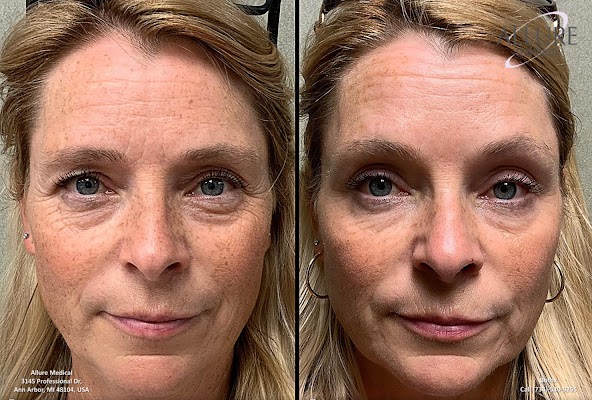
A second case involved a male presenter with thicker skin and strong facial animation. He needed 4 units per side for meaningful change, with no depressor septi dosing. Because of his airflow needs during workouts, we staged the dosing over two visits one week apart. The staged approach is useful when you want to approach the endpoint cautiously.
Aftercare that actually matters
There is no elaborate recovery time. Red dots fade in an hour or two. Skip heavy nose rubbing or aggressive cleansing for the day. Avoid high-heat workouts and saunas for the first 12 to 24 hours. Keep the head elevated for a few hours if you tend to bruise. I ask patients to avoid massaging the injection sites so the product does not diffuse where we do not want it. Normal skincare resumes the next morning. Makeup can be applied gently the same day.
If you notice unevenness after a week, do not panic. Muscles do not always respond symmetrically on day five. Give it until day ten to fourteen, then check in. A half-unit touch-up can solve a small residual flare.
How this interacts with other cosmetic plans
If you are planning a botox brow lift or botox for frown lines at the same visit, that is fine. Distant muscle groups do not interact. If you are also planning a botox lip flip or botox for gummy smile, we map carefully to avoid over-relaxing the upper lip elevators. If you are receiving filler near the nose, such as pyriform fossa support or tip refinement, I typically inject toxin first or on a separate day to limit swelling confounders and to keep planes clean.
Patients doing preventative botox in the upper face may not think about the nose, yet their cameras do. As upper-face motion softens, the nose can command more of the viewer’s attention during expression. A tiny nasal tune-up can keep the balance.
Myths, facts, and edge cases
There is a belief that botox for nostril flare will block your ability to smell. Smell relies on airflow to the olfactory cleft and neural pathways, not on small alar sidewall muscles. With conservative dosing and proper placement, smell should not change. Another myth is that botox for wrinkles in the upper face guarantees a “frozen” look that will be magnified if you also treat the nose. In practice, lower-dose, anatomy-based treatment preserves expression. The nose in motion reads refined, not rigid.
Edge cases deserve pause. If you have undergone recent rhinoplasty, wait until tissues are stable and your surgeon clears you. Scar tissue can change diffusion patterns. If you have chronic sinus disease with frequent congestion, talk with your ENT first. If you are a competitive endurance athlete, we might choose lower doses or staged dosing to respect airflow demands. If your asymmetry stems from prior trauma or structural deviation, muscle control alone may not even the look.
Where nostril flare control fits among broader concerns
Some patients arrive with several goals: botox for glabellar lines, botox for forehead lines, botox for smile lines at the corners, and a question about their nostrils. Not everything needs to be done at once. When budget or time is tight, pick the one change that most improves real life moments. For frequent speakers, that is often nostril flare. For those who squint, it is usually crow’s feet. For tension headaches, botox for migraines or for facial tension in the masseter and temporalis can be life improving, with cosmetic benefits as a side effect.
Aging face strategies sometimes skip the nose, but animation control can make midface volume look more natural. When the nose does not pull attention during a smile, cheek contour and eye brightness read stronger. Small changes create harmony.
A quick comparison snapshot
- Ideal for: dynamic flare during expression, asymmetric flaring, tip dip with smile due to muscle pull. Not ideal for: wide nasal base at rest, structural airway issues, expectation of permanent change. Typical dose: 2 to 6 units per side for flare, 0 to 2 units for depressor septi, tailored to response. Onset and peak: starts day three to five, peaks by two weeks, wears off over 8 to 12 weeks. Downtime: minimal, back to normal activities the same day with simple aftercare.
For first time patients: how to evaluate your own result
Record a short video before treatment. Smile big, say a sentence, take a sniff. Two weeks after treatment, record the same sequence in the same lighting. Watch the alar edges, then the tip. If your inhale feels unchanged and your flare looks softer, you are in the right zone. If your movement feels too restricted on deep breaths, tell your injector so the next dose can be lower or placed differently. Botox for first time patients is a learning process. The advantage is that it is temporary and adjustable.
Long term outlook and integration with other methods
There is no evidence that appropriate, intermittent botox injections to the nasal muscles cause long term harm to the tissues. Muscles recover. If you stop, your baseline movement returns. Some patients notice that repeated cycles seem to “train” the overactive muscle to settle down, reducing dose needs. That is more common when the flare was habitual rather than structurally driven.
As for pairings, micro filler near the anterior nasal spine can support the base and reduce tip dip without touching the airway. Energy devices do not affect nasal muscles. Skin care can improve pore texture on the sidewalls so light reflects more evenly in photos. None of these replace muscle control, but they complement it.
Final thoughts from the treatment chair
I have watched strong, expressive faces soften in all the right ways with a few carefully placed units. The patient laughs the same way, yet the camera reads the nose as quieter and the eyes as brighter. That is the mark of a good botox treatment — it edits, it does not rewrite. If nostril flare steals attention during your most animated moments, consider a consultation for botox for nostril flare. Bring videos, not just selfies. Demand anatomy based treatment. Start conservatively. Give it two weeks. The best results feel like you, just less distracted by a detail you used to notice every time you smiled.